
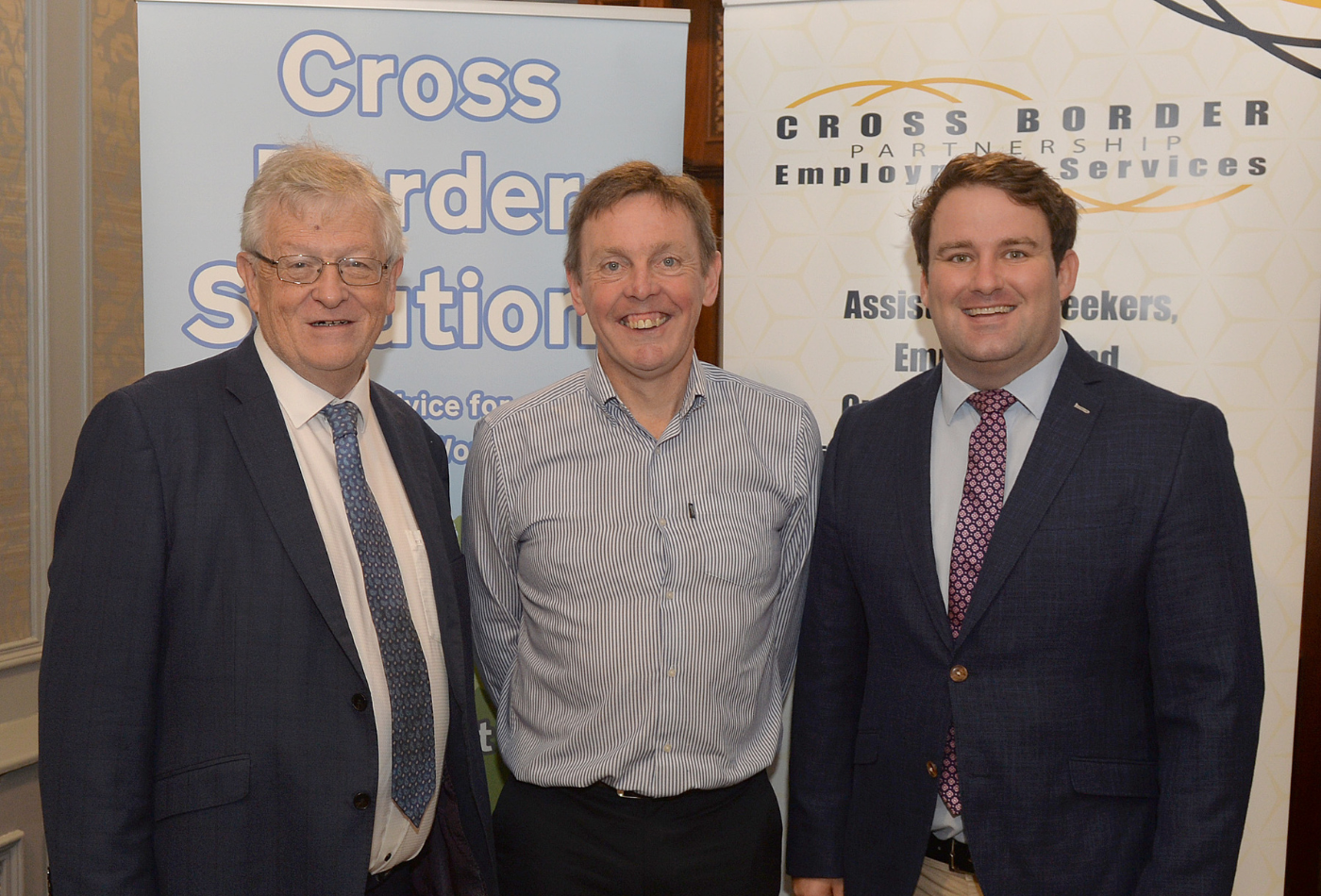
National development plans are not bedside reading for most business owners. They are long documents produced by government departments, full of objectives and frameworks and strategic goals. They sit in a drawer somewhere, occasionally cited in planning applications and grant submissions.
But as someone who spent years lobbying for the M1 Corridor to be recognised in the current National Development Plan — and who was there in the room when that recognition was secured — I can tell you that what goes into these documents has real, practical consequences for businesses along this corridor. The designation of Drogheda, Dundalk, and Newry as a primary growth centre in the NDP 2040 changed how the IDA and Enterprise Ireland approach this region. It changed what infrastructure commitments are made. It changed how planning authorities respond to development applications.
The NDP 2040 is currently under review. The Government has signalled its intention to update the plan’s strategic priorities, and the review process involves submissions from chambers, local authorities, and other stakeholders. Dundalk Chamber of Commerce — of which I am PRO — has made a detailed submission. This article explains what we are calling for and why it matters.
What We Are Asking For
Retaining M1 Corridor Primary Growth Centre Status
The single most important ask in the Chamber’s submission is that the M1 Corridor retains its current status as a primary growth centre under the NDP. There was concern during the review process that the Government might reduce the number of designated growth centres, or dilute the M1 Corridor’s specific designation.
The case for retention is strong. The Drogheda–Dundalk–Newry corridor has demonstrated its capacity to attract investment and grow employment. WuXi Biologics operates two large factories in Dundalk employing over 630 people. PayPal has a significant Dundalk presence. The corridor’s population is growing. The designation is working — this is not the moment to dilute it.
The Chamber’s submission argues — as I have consistently argued — that the M1 Corridor functions as a linear city, with a combined catchment population and economic footprint that justifies the same policy priority given to Ireland’s largest cities.
Stronger Commitment to the Dublin-Belfast Economic Corridor
Beyond the M1 Corridor itself, the Chamber’s submission advocates for formal recognition of the Dublin-Belfast Economic Corridor (DBEC) as a cross-border strategic priority. The DBEC connects the two largest cities on the island along its eastern seaboard, and the Dundalk–Newry corridor sits at its centre.
Post-Brexit, the strategic importance of the Dublin-Belfast corridor has if anything increased rather than decreased. The economic relationship between Northern Ireland and the Republic remains strong. The Windsor Framework has preserved Northern Ireland’s unique access to both the UK internal market and the EU single market — a position that creates genuine cross-border economic opportunities.
A formal DBEC designation in the revised NDP would provide a framework for cross-border infrastructure investment, planning coordination, and economic development activity that currently has no formal basis in the plan.
Water and Wastewater Infrastructure
The Chamber’s submission on infrastructure is direct: Dundalk’s wastewater treatment capacity is a binding constraint on the town’s ability to grow. New residential development — which Dundalk needs to accommodate a growing workforce — is being held back because the wastewater treatment plant cannot absorb additional connections.
Uisce Éireann has acknowledged the need for upgrade investment, as I discuss at length in our article on Dundalk’s water infrastructure gap and what it means for business growth. The Chamber’s submission calls for this investment to be ring-fenced and accelerated in the revised NDP, with a clear timeline for delivery. Without it, the town’s designation as a growth centre is aspirational rather than real.
Transport and Connectivity
The M1 motorway infrastructure is excellent. The Dublin–Belfast Enterprise rail service, while valuable, operates at a frequency and speed that does not reflect the corridor’s strategic importance. The Chamber’s submission calls for improved rail service frequency, investment in the Dundalk station and associated infrastructure, and better cross-border rail connectivity between Dundalk and Newry.
Enhanced public transport within the Dundalk urban area is also a priority — the town’s urban transport network has not kept pace with population growth or the spatial distribution of employment.
Housing
The Chamber’s submission acknowledges that housing supply is a constraint on workforce attraction and retention. The submission calls for planning policy and infrastructure investment that actively enables the delivery of housing — at multiple price points, in appropriate locations — to support the corridor’s economic growth trajectory.
Why This Matters for Dundalk Businesses
The connection between a national planning document and the day-to-day reality of running a business in Dundalk is not always obvious. Let me make it explicit.
If the NDP review strengthens the M1 Corridor designation, IDA Ireland will continue to be directed to prioritise this region when attracting foreign direct investment. New inward investment means new employers, new employees, new consumers, and new business-to-business opportunities for local suppliers.
If the water infrastructure commitment is secured and delivered, new commercial and residential development becomes possible. The town can grow. New businesses can locate here. New housing means more families, more spending, more economic activity.
If the transport investment happens, Dundalk becomes more attractive as a place to live for Dublin commuters who want an alternative to the capital’s housing costs. More residents means more local business activity.
The NDP is infrastructure policy. Infrastructure policy determines whether a region can realise its potential or stalls despite its natural advantages.
I have spent fifteen years making this case, as part of the broader advocacy work described in our article on Dundalk Chamber’s 75 years of service to the region. The M1 Corridor’s inclusion in the current NDP was a significant achievement. The review is an opportunity to build on it — and a risk that what was gained could be quietly eroded.
The Chamber’s full submission is available through Dundalk Chamber’s website. If you are a Dundalk business owner and these issues matter to you, I would encourage you to engage with the Chamber and to make your voice heard through the official consultation process. You can find more on these topics across our Dundalk economy guides.
Paddy Malone FCA AITI
Paddy is the principal of Malone & Co. Chartered Accountants in Dundalk. A Fellow of Chartered Accountants Ireland and a Chartered Tax Consultant with the Irish Tax Institute, he has been advising businesses across County Louth and the North-East for over 35 years.