The Louth Local Enterprise Office is one of the most accessible sources of business support in County Louth, and one of the most underused. I have been an accredited LEO advisor for many years, working with businesses across Dundalk and the county on grant applications and growth planning, and the gap between what is available and what gets claimed is consistently wider than it should be.
The reason, in most cases, is not that businesses don’t qualify. It is that they don’t know what to apply for, or they approach the LEO without the preparation that makes an application succeed. This article covers both.
What the Louth LEO Actually Is
The Local Enterprise Office operates within Louth County Council and is funded by the Department of Enterprise, Trade and Employment through Enterprise Ireland. There are 31 LEOs across Ireland, one in each county and city. Their mandate is to support the establishment and growth of micro-enterprises — businesses with fewer than 10 employees — and small businesses with fewer than 50 employees.
The LEO is not a bank and it is not a charity. It is a development agency with a specific objective: to create sustainable employment in the county — a county with significant advantages as a business location — by helping viable businesses start and grow. Applications are assessed on the basis of commercial viability, employment potential, and the business owner’s ability to execute the plan.
This matters because it shapes how you should approach an application. The LEO is not looking to give money to businesses that need rescuing. It is looking to invest in businesses that are ready to grow but need a catalytic boost to get there.
The Financial Supports Available
Priming Grant
For businesses less than 18 months old with credible growth potential, the Priming Grant provides financial support toward startup costs. This can cover capital expenditure (equipment, vehicles, fit-out), revenue expenditure (marketing, training, professional fees), and in some cases working capital.
The maximum grant is typically €150,000, though practical awards to micro-enterprises are generally in the range of €5,000–€50,000. A 50% match funding requirement applies — you must contribute at least an equal amount to whatever the LEO provides.
To qualify, the business must:
Be manufacturing, internationally traded, or capable of creating sustainable employment. Have been trading for less than 18 months. Have a credible business plan with realistic financial projections. Demonstrate that the owner has the capability and commitment to execute.
Business Expansion Grant
For businesses that have been trading for more than 18 months and want to invest in growth, the Business Expansion Grant provides similar support on the same 50% match funding basis. This is the equivalent of the Priming Grant for established businesses.
Common uses include purchasing new machinery or equipment, fitting out a new premises, investing in a marketing campaign or new market entry, hiring additional staff, or funding a specific growth initiative.
Trading Online Voucher
The Trading Online Voucher is the most accessible of the financial supports. It provides up to €2,500 (50% matched, so your maximum grant is €2,500 on a total spend of €5,000) to help small businesses develop or improve their online trading capability.
Qualifying spend includes website development or redesign, online store functionality, SEO and digital marketing, social media management, and online payment systems. For a small trades business that has no website, or a retail business wanting to add an online sales channel — particularly those looking to take advantage of the Living City Initiative tax reliefs now available in Dundalk — this is a relatively quick and practical support.
The application process is lighter than for the Priming or Business Expansion Grants, and turnaround times are generally faster.
Feasibility Study Grant
For businesses with an innovative concept that requires independent validation before significant investment is made, the Feasibility Study Grant can fund up to 50% of the cost of a qualifying feasibility study, up to a maximum of €15,000 in grant support.
This is designed for genuinely novel business concepts — a new product, a new process, an innovative service model — where the commercial viability needs to be established before full development investment is justified.
The Non-Financial Supports — Often More Valuable Than the Money
One of the things I consistently tell clients about the LEO is that the non-financial supports are frequently as valuable as the grant funding — sometimes more so. These are underused partly because they are less visible and partly because business owners tend to focus on the money.
Mentoring Programme
The LEO funds subsidised mentoring — access to experienced business practitioners at a heavily reduced cost (typically €50 per session for the business, with the LEO covering the rest). Mentors are people with real commercial track records in specific business areas — finance, marketing, operations, sales, HR, digital.
For a business owner who is strong in their trade but uncertain about the financial management, pricing, or growth strategy side of things, a series of mentoring sessions can be transformational. I have worked as a LEO mentor over the years, and the quality of mentors on the panel is genuinely high.
Training Programmes
Louth LEO runs regular training programmes across business fundamentals — financial management, digital marketing, sales, employment law, leadership, and other topics. These are typically subsidised or free for LEO clients and are delivered by experienced trainers. The Start Your Own Business programme is a structured introduction to entrepreneurship for people considering starting a business.
Business Planning Support
For businesses preparing a Priming or Business Expansion Grant application, LEO advisors will work with the business to develop or refine the business plan. This is not just form-filling — it is a substantive engagement with the commercial plan, the financial projections, and the growth strategy.
How to Prepare a Successful Application
Applications to the LEO are assessed by a committee, and the quality of the application makes a significant difference to the outcome. Having worked with numerous clients through LEO applications over the years, the consistent differentiators between successful and unsuccessful applications are:
A credible business plan. Not a template filled in overnight — a genuine analysis of the market, the competition, the product or service, the target customer, and the commercial model. The LEO committee reads a lot of business plans and can tell the difference between one that has been genuinely thought through and one that has been produced to satisfy a form requirement.
Realistic, evidenced financial projections. Revenue forecasts that are neither wildly optimistic nor implausibly modest. Cost projections that cover all the real costs of operating the business. Cash flow projections that demonstrate the business can survive while scaling. These projections should be built from assumptions you can defend — not plugged to produce a number that looks attractive.
Demonstrated match funding. The 50% match funding requirement means you need to show that you have your half of the investment available and committed. Bank statements, savings, or a loan approval letter are the kinds of evidence required.
Clarity on employment creation. The LEO’s mandate includes job creation. Applications that clearly articulate how many jobs the investment will create or sustain — and over what timeframe — score better than applications that are vague on this point.
A capable applicant. The LEO is backing you as much as the business. Demonstrating that you have the relevant experience, skills, and commitment to execute the plan matters.
If you are considering an LEO application and want to ensure your application is as strong as possible, working with an accountant who is familiar with the process — to produce credible financials and sense-check the plan — is worth the investment. The LEO is just one element of the support landscape for businesses in this region, which we cover across our Dundalk economy guides. A well-prepared application that secures a €30,000 grant has a much better return on the preparation cost than a weak application that fails.
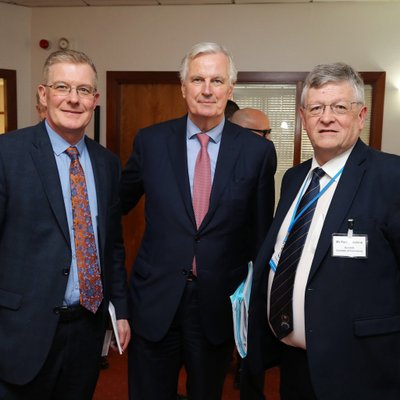
Paddy Malone FCA AITI
Paddy is the principal of Malone & Co. Chartered Accountants in Dundalk. A Fellow of Chartered Accountants Ireland and a Chartered Tax Consultant with the Irish Tax Institute, he has been advising businesses across County Louth and the North-East for over 35 years.