
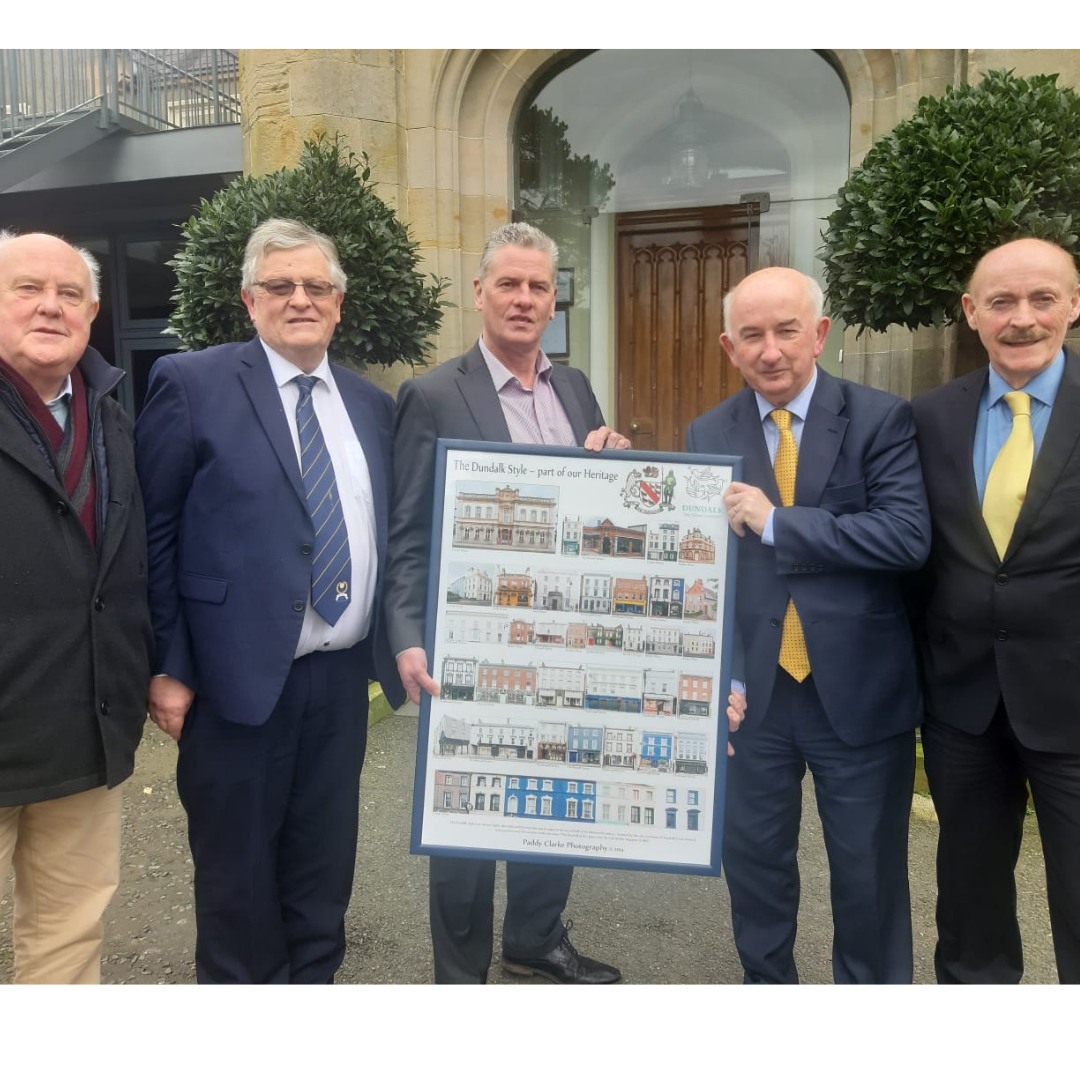
In October 2025, Dundalk was added to the Living City Initiative — a significant win for the town that I, alongside the team at Dundalk Chamber of Commerce, had been pursuing for over a decade through successive pre-budget submissions. Our article on Dundalk Chamber’s 75 years of advocacy covers the full story of that campaign and others like it.
I want to explain what this scheme actually means in plain terms, because the press coverage tends to focus on the headline announcement without getting into the detail that matters to business owners and property investors. There are real, substantial tax reliefs available here, and they are not widely understood.
What Is the Living City Initiative?
The Living City Initiative (LCI) is a tax relief scheme introduced by the Irish Government to encourage the refurbishment of older buildings in designated city and town centres. The idea is to get people living above shops again, to bring vacant commercial properties back into use, and to drive investment and footfall into town centres that have struggled with vacancy and dereliction.
The scheme was originally introduced for Cork, Dublin, Galway, Kilkenny, Limerick and Waterford. Dundalk’s inclusion — finally — brings one of Ireland’s most strategically important towns into a scheme that has already driven meaningful regeneration in those other locations.
What Tax Reliefs Does It Offer?
There are two distinct types of relief under the scheme, and it is important to understand which one applies to your situation.
For Residential Use — Income Tax Relief
If you are an individual who owns or purchases a property in a qualifying area of Dundalk town centre and spends money refurbishing it for use as a private residence, you can claim income tax relief on the cost of that refurbishment. The relief is available at your marginal rate of tax — meaning a higher-rate taxpayer can effectively recover 40% of eligible refurbishment costs through their tax return.
The property must become your principal private residence. Investment properties and rental properties do not qualify for this strand of the relief.
The expenditure must be on a qualifying building — generally defined as a building that was originally constructed before 1915 for use as a dwelling. Your tax advisor can confirm whether a specific property meets the criteria.
For Commercial Use — Capital Allowances
For businesses and investors who spend money refurbishing a qualifying commercial property in the designated area for use in a trade or profession, accelerated capital allowances are available. This means you can write off the cost of the refurbishment against your taxable income over a seven-year period, at 15% per year for the first six years and 10% in the final year.
This is a meaningful relief for any business considering taking on a town-centre premises that requires investment. A shop, office, restaurant, or professional practice that spends €100,000 refurbishing a qualifying premises can offset the full cost against taxable profits over seven years, reducing the actual after-tax cost of that investment significantly.
What Does “Qualifying Area” Mean for Dundalk?
The specific streets and areas designated under the Living City Initiative for Dundalk are defined by Revenue and set out in the relevant statutory instrument. In broad terms, the scheme covers the historic core of the town centre — the streets and buildings that form the commercial heart of Dundalk and where vacancy and underuse have been most visible.
If you are considering a specific property, the best approach is to check the Revenue guidelines or to speak with a tax advisor before committing. The designation boundary matters — a property just outside it will not qualify, regardless of its age or condition.
At the time of writing, Revenue has published guidance on the scheme for Dundalk. I would recommend checking revenue.ie directly for the current designated area map, as this is something that may be refined or updated.
Why This Matters for Dundalk
Dundalk town centre has been dealing with the same pressures as many Irish towns — vacancy above shops, underinvestment in older buildings, an exodus of residents from the town core to suburban housing estates. The Living City Initiative addresses the economics of this problem directly.
The refurbishment of an older town-centre building is expensive, though the broader cost advantages of operating in Dundalk rather than Dublin — which I set out in our article on why Dundalk is one of Ireland’s most underrated business locations — help to offset this. When you factor in the costs of bringing a Victorian-era building up to modern standards — structural work, insulation, windows, plumbing, electrics — the numbers often don’t stack up against new-build alternatives on the edge of town. The LCI reliefs are designed specifically to close that gap and make town-centre investment commercially viable.
I have seen this scheme work in Cork and Limerick. The visual impact of refurbished buildings on a town centre — particularly over residential floors that had been empty for decades — is significant. Dundalk now has access to the same tool.
What Should You Do If You’re Interested?
If you own a property in Dundalk town centre, are considering purchasing one, or are running a business that might relocate to or expand within the designated area, the first step is a proper assessment of whether your specific situation qualifies.
Not every older building qualifies. Not every type of expenditure qualifies. And the interaction between the LCI relief and other tax obligations — including CGT, VAT on property transactions, and stamp duty — requires careful planning.
The relief is only valuable if you have the taxable income or profits to set it against. For some individuals and businesses, the timing of the expenditure relative to the tax year matters significantly.
These are not reasons to ignore the scheme — they are reasons to get proper advice before you spend money.
At Malone & Co., we have been following the Living City Initiative since its introduction and were directly involved in the campaign to have Dundalk included. The LCI is one of several policy developments shaping the town’s future that we cover across our Dundalk economy guides. If you want to understand whether this scheme could benefit your property plans or business investment, get in touch.

Paddy Malone FCA AITI
Paddy is the principal of Malone & Co. Chartered Accountants in Dundalk. A Fellow of Chartered Accountants Ireland and a Chartered Tax Consultant with the Irish Tax Institute, he has been advising businesses across County Louth and the North-East for over 35 years.