
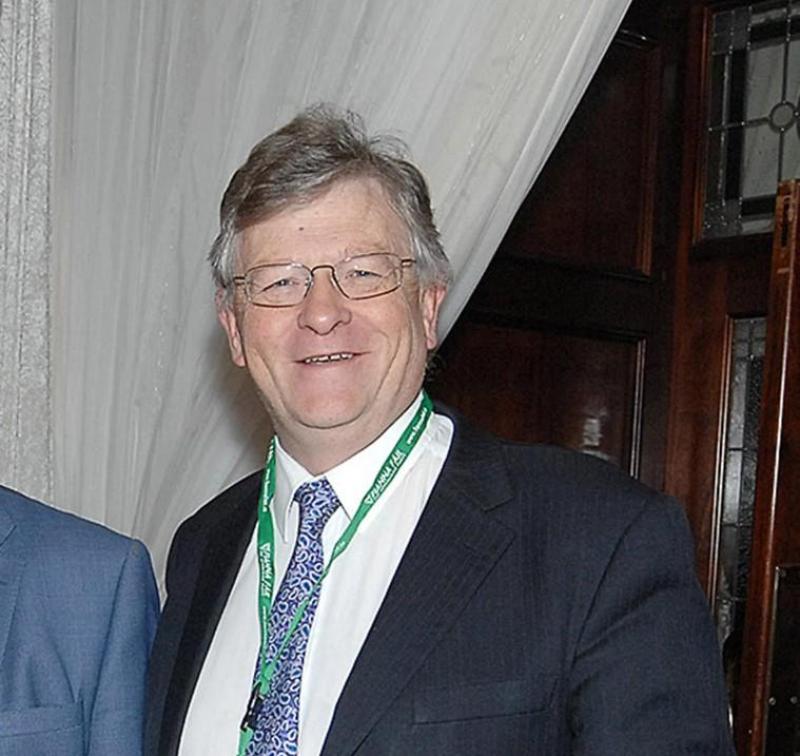
Between 2020 and 2023, I served as Chair of the Governing Body of Dundalk Institute of Technology — appointed to the role by the Minister for Education. From that position, I had a direct view of both the challenges and the opportunities facing DkIT as it navigated a changing landscape in Irish higher education.
The primary challenge during my chairmanship was the question of DkIT’s future within the Technological University (TU) model that the Government had set as the direction of travel for the Institute of Technology sector. The primary opportunity — and one I was consistent about throughout my tenure — was to strengthen the connection between the Institute and the business community it serves.
I am writing about DkIT here not because I have a role in it — my chairmanship ended in 2023 — but because the Institute’s trajectory matters enormously for businesses in the Dundalk region, and it is a story that deserves to be told clearly.
Where DkIT Is Now
DkIT has been in active discussions with Maynooth University regarding collaboration and potential integration. This process reflects the broader national direction in which the standalone Institute of Technology model is being replaced by a smaller number of Technological Universities with larger student bodies, broader academic programmes, and greater research capacity.
The collaboration with Maynooth University — one of Ireland’s most research-active universities, with particular strengths in science, technology, humanities, and professional education — potentially gives DkIT access to a national and international academic platform that a standalone institute of its size could not sustain independently.
For the purposes of this article, what matters is not the governance detail of the integration process but its practical implications for Dundalk businesses.
What a Stronger Higher Education Presence Means for Business
The relationship between a university-level institution and the regional business community it serves operates through several channels, all of which have direct commercial relevance.
Graduate supply. The most fundamental contribution of a regional higher education institution to business is graduates — people who have been educated and trained in the region, who have put down roots in the region, and who choose to stay and work here rather than moving to Dublin or overseas. DkIT graduates represent a significant proportion of the professional workforce in County Louth and the surrounding region.
A stronger, more academically credentialled DkIT — with access to a wider range of programmes and a clearer pathway to postgraduate and doctoral education through the Maynooth collaboration — should produce a more diverse and higher-skilled graduate cohort over time. For businesses in the region that compete with Dublin employers for talent — a dynamic I explored in our article on why Dundalk is one of Ireland’s most underrated business locations — this matters.
Applied research and innovation. Universities generate applied research that businesses can use. The Regional Development Centre (RDC) at DkIT has been facilitating business-academic collaboration for decades — connecting companies with academic expertise, facilitating applied research projects, and supporting innovation within local businesses.
For a Dundalk business with a technical problem, a product development challenge, or an interest in exploring a new technology, the RDC is a resource that many businesses underuse. The collaboration with Maynooth extends the range of academic expertise accessible through this channel.
Continuing education and professional development. A consistent theme in my engagement with Dundalk businesses as Chamber PRO is the difficulty of finding higher-level professional development close to home. Senior managers, technical specialists, and professionals who want to continue their education have typically had to travel to Dublin.
A stronger DkIT with access to Maynooth’s postgraduate programmes — potentially including programmes that can be delivered in Dundalk, with the flexibility that working professionals need — addresses a genuine gap.
Talent attraction. A strong regional university is an amenity that attracts educated families to a region. People who value higher education for themselves and their children tend to cluster in areas that have universities. This may sound remote from the daily concerns of a small business owner, but over a twenty-year horizon, the educational infrastructure of a region shapes its social and economic character.
Connecting With DkIT’s Business Support
DkIT’s Regional Development Centre and its enterprise and innovation units have consistently been open to engagement with local businesses. The challenge has been awareness — many businesses in Dundalk and County Louth do not know that the supports available through DkIT exist.
If you are a business owner in the region and you have a specific challenge that might benefit from academic input — a technical problem, a process optimisation question, a feasibility study for a new product — it is worth contacting the RDC directly to explore whether there is a project scope. In some cases, funding may be available for collaborative research projects through Enterprise Ireland, Horizon Europe, and other programmes.
The connection between Dundalk’s business community and DkIT has historically been less close than it should be for two institutions that share a geographic home and, in many respects, a common interest. The Chamber has worked to strengthen this connection over the years, as part of the broader advocacy work I describe in our piece on Dundalk Chamber’s 75 years of business advocacy. There is more to do.
A Personal Note
When I presented to the Oireachtas Committee on Education in December 2019 as Chair-Designate of DkIT’s Governing Body, one of the things I emphasised was the need for DkIT to become more deeply integrated with the business and economic life of the region it serves — to offer graduates who want to stay in the region genuine reasons to do so, and to give businesses genuine reasons to look to DkIT as a resource rather than a peripheral institution.
The collaboration with Maynooth University is a step toward a stronger, more resilient higher education presence in Dundalk. For the region’s businesses, that is a good thing — even if the full benefits will take years to realise. This is one of several factors shaping the regional economy that we cover across our Dundalk economy guides.
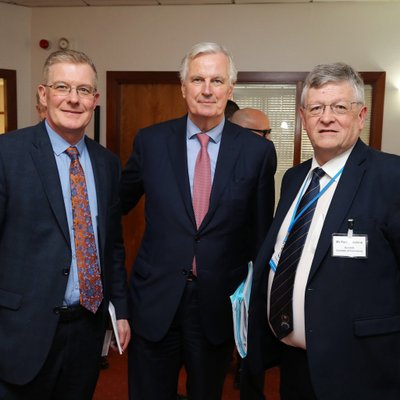
Paddy Malone FCA AITI
Paddy is the principal of Malone & Co. Chartered Accountants in Dundalk. A Fellow of Chartered Accountants Ireland and a Chartered Tax Consultant with the Irish Tax Institute, he has been advising businesses across County Louth and the North-East for over 35 years.