
When offices across Ireland emptied in 2020 and employees went home to work, most employers focused on the practical challenges — laptops, broadband, productivity. The cross-border tax implications were an afterthought, if they were considered at all.
Five years later, remote and hybrid working is permanent for a significant portion of the workforce. And the tax consequences of remote working across the Irish border — which were tolerated as an emergency measure in the early pandemic years — are now being actively examined by Revenue and HMRC.
In Dundalk and along the M1 Corridor, this matters acutely. Employees who live in Newry and work remotely for Dundalk employers, or who live in Dundalk and work remotely for Newry or Belfast employers, are in situations that carry genuine compliance risk — for both the employee and the employer. Most of them have never had that risk properly assessed.
Why Remote Working Changed Everything
The traditional cross-border worker — who I wrote about in my earlier guide to employing staff across the NI-ROI border — physically travels across the border to work. They go to their employer’s premises in another jurisdiction, perform their duties there, and come home. The tax rules for this situation are well-established and have been operating under the Ireland-UK double taxation agreement for decades.
Remote working broke that model. An employee who lives in Newry and works from their kitchen table for a Dundalk company is not travelling anywhere. They are performing all their duties in Northern Ireland, not in the Republic of Ireland where their employer is based. This changes the tax analysis entirely.
The Core Problem: Where Are the Duties Being Performed?
Under both Irish and UK tax law, employment income is taxed in the jurisdiction where the employment duties are physically performed. For a traditional cross-border commuter, the duties are performed at the employer’s premises — so if those premises are in Dundalk, the income is taxed in Ireland.
For a remote worker living in Northern Ireland and working from home, the duties are performed in Northern Ireland. This means:
The income is, in principle, UK-source income subject to UK income tax. Irish PAYE should not be deducted on that income. The employer may have UK employer registration and National Insurance obligations.
If the Dundalk employer has been operating Irish PAYE on a fully remote Newry-based employee, they may have been deducting the wrong tax from the wrong person in the wrong jurisdiction.
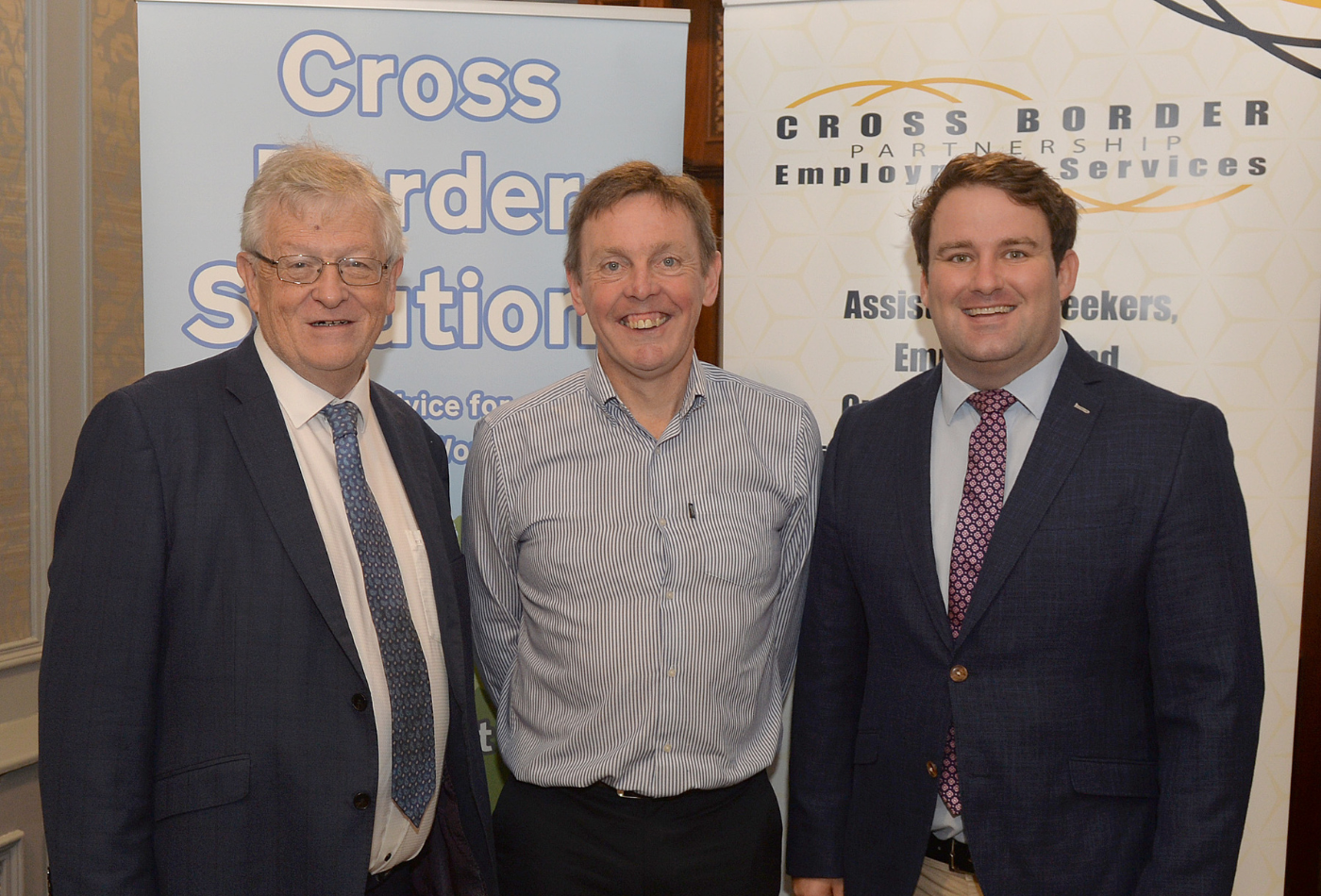
This is not an unusual situation. At the Dundalk Chamber cross-border tax breakfast that I was involved in organising, this exact scenario was identified as one of the most common compliance failures along the border.
The Permanent Establishment Risk
Beyond the individual employee’s tax position, there is a potentially more significant risk for the employer: permanent establishment.
A permanent establishment (PE) arises when a business has a taxable presence in a jurisdiction through which it conducts business. Traditional PEs are fixed places of business — offices, factories, branches. But tax authorities in both Ireland and the UK increasingly take the view that a home office where an employee regularly works, and from which they perform core business functions, can constitute a PE of the employer in that jurisdiction.
If a Dundalk company has employees working from home in Northern Ireland, and those employees are doing substantive business activity — not just occasional emails, but actually concluding contracts, managing client relationships, or making business decisions — there is a risk that the company has created a UK permanent establishment. A UK PE would make the company liable for UK corporation tax on the profits attributable to the PE’s activities.
This is a risk that has existed since remote working became widespread, but post-Brexit it is more acute. HMRC no longer applies the same EU-derived principles that previously provided some cushion around PE determinations. The UK is now applying its domestic law and bilateral treaty rules more strictly.
For Irish businesses with Northern Ireland-based remote workers, the question to answer is: are those employees performing core business functions, or purely administrative ones? The former creates PE risk. The latter is lower risk, but still needs to be assessed.
The Reverse: Northern Ireland Employers With ROI Remote Workers
The mirror image of this situation — a Northern Ireland or Belfast employer with employees working remotely from Dublin, County Louth, or elsewhere in the Republic — has the same risks in reverse.
The employee’s income, for the days worked from their ROI home, is ROI-source income. Irish Revenue has taxing rights on that element. The employee needs to declare it on an Irish income tax return. The employer potentially has Irish PAYE registration obligations.
If the employee is performing core functions from Ireland — not just administrative tasks — the Northern Ireland employer potentially has an Irish PE and faces Irish corporation tax exposure.
These mirror risks exist simultaneously on both sides of the border. The complexity grows when individual employees have hybrid working patterns — some days in the Northern Ireland office, some days at home in the Republic. In many of these cases, dual payroll across both jurisdictions becomes a requirement rather than an option.
The 30-Day Rule and Hybrid Workers
One relatively common practical approach for managing cross-border hybrid working involves the 30-day threshold — the idea that occasional short visits to the other jurisdiction’s employer premises do not automatically create full PE or tax residency consequences.
For employees working primarily in one jurisdiction but spending occasional days at the employer’s premises in the other, many businesses have adopted a 30-day or 60-day policy — employees who spend fewer than a defined number of days per year in the other jurisdiction trigger reduced or no cross-border tax obligations.
In practice, HMRC has signalled that for NI employers with ROI-based employees, it may operate PAYE only on the proportion of earnings related to duties performed in Northern Ireland (broadly, the percentage of working days spent physically in NI), rather than on 100% of earnings — but only where a formal clearance has been obtained from HMRC in advance. This advance clearance is not automatic and requires an application.
Revenue in Ireland takes a similar pragmatic approach for ROI employers with NI-based staff, but again, the starting point is the formal legal analysis, not an assumption.
Social Security — A Separate and Complicated Layer
Income tax and social security operate under different frameworks for cross-border workers. Even where the income tax position is clear, the social security analysis may point in a different direction.
Under the retained EU Social Security Coordination rules (which continue to apply under the Ireland-UK Withdrawal Agreement post-Brexit), an employee who performs a substantial part of their work — more than 25% — in their country of residence pays social security in their country of residence only.
For a Newry-based employee who works mostly from home (Northern Ireland), more than 25% of their working time is in Northern Ireland. Their social security should be UK National Insurance, not Irish PRSI — regardless of who their employer is.
For a Dundalk-based employee working remotely for a Belfast employer, the reverse applies: more than 25% of their work is being performed in Ireland, so Irish PRSI applies.
Getting this wrong — collecting PRSI when NIC should apply, or vice versa — creates a situation where the employee’s social security record is being built in the wrong jurisdiction. For pension and benefit entitlements, this matters.
What Should Employers Do?
The honest answer is that most cross-border remote working arrangements in the Dundalk-Newry corridor have not been formally assessed since they were put in place as emergency measures during the pandemic. That is a statement about the reality of how businesses operate under pressure, not a criticism.
The time to assess them properly is now, before Revenue or HMRC raises a query. The steps are:
Document where each cross-border employee physically works their hours — what proportion in each jurisdiction, on what pattern. For each employee, determine the correct tax jurisdiction for PAYE and the correct social security jurisdiction. Assess whether any employee’s activities create a PE risk for the employer in the other jurisdiction. Regularise the payroll to reflect the correct position, including any necessary registrations in the other jurisdiction. For hybrid workers, put a clear policy in place for how working days are allocated and tracked.
You can find more on these topics across our cross-border business guides. This is an area where getting specialist advice from someone with practical experience of both the Irish and Northern Irish tax systems is essential. If you want a review of your cross-border remote working arrangements, I am happy to have that conversation.

Paddy Malone FCA AITI
Paddy is the principal of Malone & Co. Chartered Accountants in Dundalk. A Fellow of Chartered Accountants Ireland and a Chartered Tax Consultant with the Irish Tax Institute, he has been advising businesses across County Louth and the North-East for over 35 years.