InterTradeIreland is one of the most valuable and least-known resources available to small businesses along the Irish border. It is a cross-border body jointly funded by the Irish and UK governments, with a specific mandate to grow cross-border trade and business development between the Republic of Ireland and Northern Ireland.
For a Dundalk business, the geography alone makes InterTradeIreland directly relevant. The Northern Ireland market — a population of nearly two million people accessible in under thirty minutes — is the natural first international market for many County Louth businesses. InterTradeIreland’s programmes are specifically designed to help businesses make that move, and they are substantially subsidised.
I am an accredited InterTradeIreland advisor. I have been working with businesses accessing these programmes for many years, and I can tell you that they are consistently underused relative to their potential. Many eligible businesses simply do not know the programmes exist. InterTradeIreland is just one of several funding sources covered in our business startup guides.
What InterTradeIreland Does
InterTradeIreland sits alongside Enterprise Ireland and the IDA in the infrastructure of Irish business development, but with a specific cross-border focus. Unlike Enterprise Ireland, which is focused on businesses with export potential into international markets, InterTradeIreland is specifically focused on the island of Ireland — helping businesses on both sides of the border trade with each other and develop capability for further internationalisation.
It is funded jointly by the Department of Enterprise, Trade and Employment in Dublin and the Department for the Economy in Belfast. It operates from offices in Newry — directly on the border, which is fitting.
BLOOM: Sales Development Across the Border
BLOOM (formerly known as ACUMEN) is InterTradeIreland’s flagship cross-border sales development programme. It is designed for businesses that want to start selling into the cross-border market for the first time — a Republic of Ireland business making its first serious push into Northern Ireland, or a Northern Ireland business targeting the Irish market.
The programme provides funding to hire a dedicated sales or business development resource specifically for the cross-border market. This can be:
A new employee — a salesperson, account manager, or business development executive specifically tasked with developing cross-border sales. A specialist consultant or advisor — someone with established cross-border market knowledge who is engaged on a defined project basis to open doors and generate cross-border sales.
InterTradeIreland contributes up to 50% of the cost of this resource, subject to a maximum contribution that varies by programme cycle. The supported period is typically six to twelve months.
The rationale is straightforward. Developing a new market requires investment in sales capacity. A small business that cannot afford to dedicate a full-time resource to cross-border sales development — because the upside is uncertain and the salary cost is certain — can use the BLOOM subsidy to make that investment with significantly reduced risk.
BLOOM is not available to businesses that are already selling substantially into the cross-border market. It is specifically for businesses making their first structured entry into the cross-border market.
SPROUT: Early-Stage Cross-Border Business Development
SPROUT is aimed at earlier-stage businesses — companies that have a product or service with cross-border potential but that are still in the early stages of developing their business model and market entry strategy.
The programme provides structured support including mentoring, market analysis, a small financial award, and peer learning with other participating businesses. It is a cohort-based programme — participants go through the programme together over a defined period, which creates a peer network alongside the direct support.
For a Dundalk start-up with a product or service that could be sold on both sides of the border, SPROUT is often the right starting point before BLOOM — it helps refine the cross-border proposition and develop the market entry strategy before significant sales investment is made.
Elevate: Specific Advisory Support
The Elevate programme provides targeted advisory support to established SMEs on specific issues relating to cross-border trade. Unlike BLOOM and SPROUT, which are structured programmes with a defined shape and timeline, Elevate is more responsive to the specific needs of individual businesses.
A business that has a particular challenge — understanding the cross-border VAT position of a new product, structuring a cross-border employment arrangement, assessing the customs implications of a new supply chain — can access Elevate to get specific professional advice, substantially subsidised by InterTradeIreland.
As an accredited InterTradeIreland advisor, I provide advice to businesses through the Elevate programme in the areas of taxation, company structure, employment, and financial management.
Connect: Supply Chain and Partnerships
Connect is InterTradeIreland’s matchmaking programme — helping businesses find suppliers, distributors, agents, or partners on the other side of the border.
For a Dundalk manufacturer that wants to find Northern Ireland distributors, a Republic of Ireland service business that wants to find Northern Ireland partners, or a cross-border business looking to develop its supply chain, Connect provides facilitated introductions and support.
How to Access InterTradeIreland Support
All InterTradeIreland programmes are accessed through the InterTradeIreland website (intertradeireland.com) or through accredited advisors. The application process for each programme is specific — BLOOM requires a structured application setting out the cross-border sales opportunity, the proposed business development resource, and the expected outcomes. SPROUT has a competitive selection process.
InterTradeIreland is not the only support available to County Louth businesses — our guide to grants available for new businesses in County Louth covers LEO, Enterprise Ireland, and other programmes alongside InterTradeIreland. The key eligibility requirements across programmes are:
The business must be an SME (under 250 employees). The business must have genuine cross-border trading potential — either developing it (BLOOM, SPROUT) or already present (Elevate, Connect). The business must be willing to commit management time to the programme.
InterTradeIreland is not a passive grant source. It requires active engagement from the businesses it supports. The businesses that get the most value from the programmes are those that treat the support as an investment in their cross-border strategy, not simply as a subsidy.
The Dundalk Opportunity
For any Dundalk business that is not currently selling into Northern Ireland, the question is why not. The Northern Ireland market is close, culturally familiar, legally distinct but practically accessible, and largely uncontested by Dundalk businesses that have not made the deliberate decision to develop it.
InterTradeIreland’s programmes reduce the cost and risk of making that decision. Most programmes require a strong business plan as part of the application, so preparation matters. If you want to explore whether your business is a candidate for BLOOM, SPROUT, or another InterTradeIreland programme, a conversation with an accredited advisor is the natural starting point.
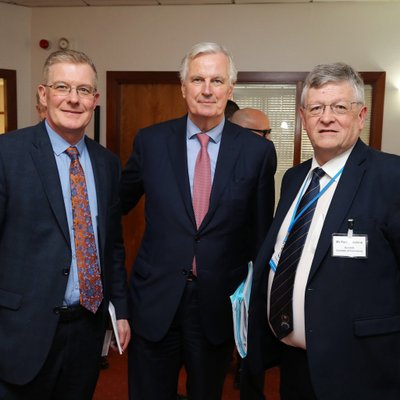
Paddy Malone FCA AITI
Paddy is the principal of Malone & Co. Chartered Accountants in Dundalk. A Fellow of Chartered Accountants Ireland and a Chartered Tax Consultant with the Irish Tax Institute, he has been advising businesses across County Louth and the North-East for over 35 years.