

Writing an article about how to choose an accountant when I am an accountant requires a degree of self-awareness. I am, inevitably, going to describe a set of criteria that Malone & Co. meets. That transparency noted, the criteria I am about to describe are genuine — they are the things I would look for if I were a business owner choosing a professional advisor for the first time.
The stakes of this choice are higher than most people realise when they make it, particularly in the first twelve months when the financial mistakes new business owners make are most costly. A good accountant saves you money, keeps you compliant, and provides advice that genuinely affects the trajectory of your business. A poor one — or simply one who is not the right fit for your business — costs you money through missed reliefs, generates compliance risk through poor work, and leaves you making financial decisions without adequate information.
Understand What You Are Buying
Before you can choose an accountant, you need to be clear about what you need. The range of professionals who call themselves “accountants” in Ireland spans from bookkeepers with no formal qualifications to Fellows of the Institute of Chartered Accountants with decades of specialist expertise. The word “accountant” in Ireland is not a protected title — legally, anyone can use it.
The services typically available include bookkeeping and record-keeping, management accounts preparation, annual accounts and tax return preparation, VAT and payroll compliance, company secretarial services, audit, and tax planning and advisory work. Some practices offer all of these; others specialise.
Be honest with yourself about what your business needs. A sole trader with a simple trading operation needs something different from a company with employees, VAT, cross-border sales, and complex transactions. Paying for services you don’t need is wasteful; trying to use an accountancy practice that isn’t set up for your needs is frustrating for both parties.
Check the Qualifications and Professional Body Membership
In Ireland, the main professional bodies for accountants are:
Chartered Accountants Ireland (CAI) — whose members hold the ACA or FCA designation. This is the largest and oldest accountancy body in Ireland and has a strong reputation for technical standards.
The Association of Chartered Certified Accountants (ACCA) — an international body whose Irish members hold the ACCA designation.
CPA Ireland (Certified Public Accountants) — a primarily Ireland-focused body.
Members of all three bodies are subject to professional standards, ongoing continuing professional development (CPD) requirements, and regulatory oversight. They are required to hold professional indemnity insurance.
Membership of a recognised professional body matters for several specific reasons. Only registered members of supervisory bodies can carry out statutory audits — so if your company needs an audit (because of its size, or because it has lost its audit exemption due to a late filing), your accountant must be a registered auditor. An accountant who is not a member of a recognised body cannot provide this service regardless of how long they have been in practice.
Ask any accountant you are considering: what professional body are you a member of? What is your registration number? This should be information they provide readily and proudly. If they are evasive or vague, treat it as a red flag.
Look for Relevant Sector Experience
Accountancy is broad, and experience in one sector does not automatically transfer to another. An accountant who is excellent at personal tax returns for PAYE employees may not have deep knowledge of the Relevant Contracts Tax obligations of a construction subcontractor. An accountant whose practice focuses on technology startups may not be the ideal choice for a traditional manufacturing business.
Ask specifically about their experience with businesses similar to yours — in size, sector, and complexity. Ask for examples of the issues they have dealt with for similar clients and how they resolved them. A good accountant will have concrete answers. A generalist who has never handled your specific issues will talk in generalities.
For Dundalk and County Louth businesses, local knowledge is a genuine advantage in specific areas. Understanding the cross-border employment landscape, familiarity with InterTradeIreland and LEO support programmes, and knowledge of the Living City Initiative and the M1 Corridor’s policy environment are things that not every Irish accountant will have. They matter for businesses in this region.
Understand the Fee Structure
Accounting fees are quoted in various ways — fixed annual fees, hourly rates, or a combination. Before engaging any accountant, you should understand clearly:
What services are included in the quoted fee. What is charged additionally (e.g., Companies Registration Office filing fees, out-of-scope work, attendance at Revenue meetings). How the fee is reviewed and what triggers a revision. Whether the fee is billed monthly, quarterly, or annually.
A fixed annual fee for a defined scope of work is generally preferable for budget certainty. Hourly billing can become expensive if you ask a lot of questions or if the accountant does not manage scope efficiently.
The cheapest option is rarely the best value. An accountant who charges €500 per year for your tax return but misses reliefs worth €2,000 is costing you more than one who charges €1,000 and captures everything. The question is not the fee; it is the return on that fee.
Assess Their Communication Style and Accessibility
You will be trusting this person with sensitive financial information and relying on their advice on important decisions. The communication dynamic matters as much as the technical competence.
In a first meeting — and any reputable accountant should be willing to have an initial consultation before you commit — pay attention to how they communicate. Do they explain things in plain English or do they retreat into jargon? Do they ask questions about your business and your goals, or do they immediately start talking about their own services? Do they respond to your questions directly, or do they hedge everything?
Accessibility is also important. When Revenue sends a query, when an urgent compliance issue arises, or when you are about to make a significant financial decision, you need to be able to reach your accountant and get a useful response within a reasonable timeframe. Ask how they handle urgent queries. Ask what their response time commitment is for client communications.
The First Year Test
Regardless of how a new accountancy relationship starts, the first year tells you a great deal. Did the accountant deliver on time? Did they proactively identify issues or opportunities, or simply do the minimum requested? Did they communicate without being chased? Did their advice turn out to be correct and useful?
Switching accountants after the first year is administratively straightforward — a simple letter of disengagement and a new engagement letter. It is worth doing if the relationship is not working. The sunk cost of the first year’s fee is not a reason to continue with an accountant who is not serving your business well. For more guidance on the early stages of running a business, browse our business startup guides.
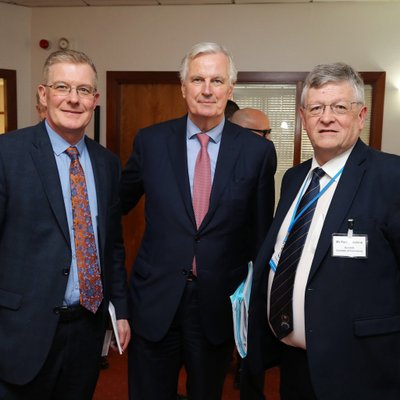
Paddy Malone FCA AITI
Paddy is the principal of Malone & Co. Chartered Accountants in Dundalk. A Fellow of Chartered Accountants Ireland and a Chartered Tax Consultant with the Irish Tax Institute, he has been advising businesses across County Louth and the North-East for over 35 years.