
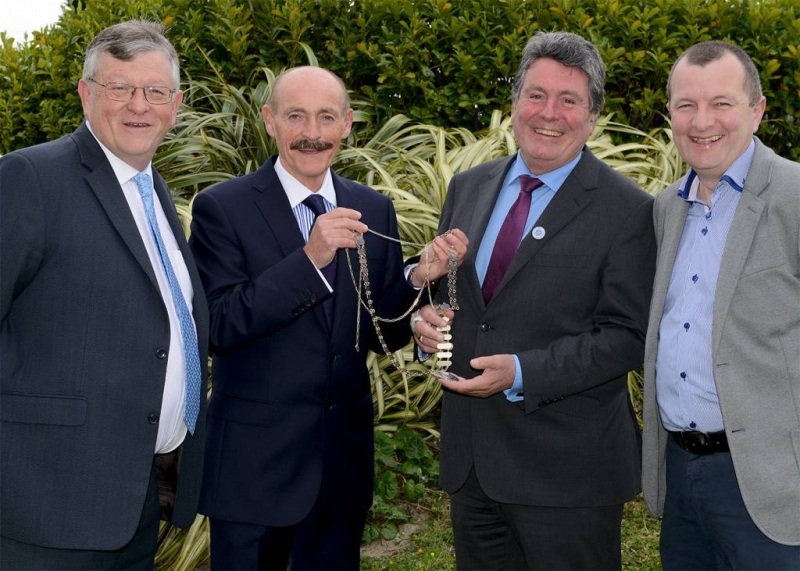
Malone & Co. is itself a family business. My father Jim founded the practice in 1950. I took over the running of it in 1996. The continuity of a family business across generations is something I understand personally, not just professionally.
Succession — whether passing a business to a child, a nephew, a long-serving employee, or selling to an external buyer — is one of the most consequential financial events in the life of an Irish business owner. It touches Capital Gains Tax, Capital Acquisitions Tax, stamp duty, company law, employment law, and in many cases family relationships. Getting it right requires planning. Getting it wrong can cost hundreds of thousands of euros in unnecessary tax, or fracture family relationships that have been built over decades.
This article covers the Irish tax framework for family business succession, the reliefs available, and the planning principles that make the difference between a smooth transition and a damaging one. For broader context on business structures and transitions, you may also find our business startup guides useful.
The Tax Landscape
When you transfer a business — or shares in a company — to a family member, up to three taxes may be in play simultaneously.
Capital Gains Tax (CGT) is potentially payable by the person transferring the business. Even a gift — transferring the business for no consideration — can trigger a deemed CGT liability, because Revenue treats a gift at market value for CGT purposes. If the business has grown in value since you acquired it, you have a chargeable gain regardless of whether you received payment.
Capital Acquisitions Tax (CAT) is potentially payable by the person receiving the business. CAT is the Irish gift and inheritance tax. The recipient is taxed on the value of what they receive above their lifetime tax-free threshold. The threshold depends on the relationship between the giver and the recipient:
Group A (child): €400,000 lifetime threshold. Group B (sibling, niece, nephew, grandchild): €40,000. Group C (anyone else): €20,000.
Gifts and inheritances received from 5 December 1991 onwards aggregate against the relevant threshold. Once the threshold is exhausted, CAT is charged at 33% on the excess.
Stamp Duty applies on the transfer of shares at 1% of the market value (for shares in a private company) and on the transfer of business assets at rates depending on the asset type. Commercial property transfers attract stamp duty at 7.5%.
The potential triple tax charge — CGT on the way out, CAT on the way in, stamp duty on the transfer — can be devastating without the reliefs that are available to mitigate it.
Retirement Relief: The Most Powerful CGT Mitigation
I covered Retirement Relief in detail in my article on CGT, but in the context of family succession it deserves particular emphasis.
For a transfer to a child, Retirement Relief provides complete CGT exemption on qualifying business assets regardless of the value of those assets, provided:
The transferor is aged 55 or over. The transferor has owned the business assets for at least ten years. The transferor has been involved in the business — as a working owner, director, or employee — for at least ten years. The child continues to operate the business for at least six years after receiving it.
If the child sells or exits within six years of receiving the business, the Retirement Relief is clawed back — the CGT that was deferred becomes payable by the child.
This relief is transformational for family succession. A business worth €3 million with a base cost of €200,000 would generate a CGT liability of approximately €924,000 at the standard 33% rate. Under Retirement Relief, that liability is nil — provided all conditions are met.
The ten-year conditions must be satisfied at the date of transfer. This means the planning must begin at least a decade in advance. You cannot decide in year nine to accelerate a succession and expect the ten-year period to accommodate it if you started later.
Business Relief: The CAT Mitigation
On the CAT side, Business Relief under Section 89 of the Capital Acquisitions Tax Consolidation Act 2003 provides an 90% reduction in the value of qualifying business property for CAT purposes.
This means that a business worth €2 million, which would normally generate a CAT liability on the full €2 million (less the Group A threshold), is instead valued at €200,000 for CAT purposes after the 90% reduction. A child receiving a €2 million business effectively has CAT assessed on €200,000 — well within the €400,000 Group A threshold.
The conditions for Business Relief mirror those for CGT Retirement Relief in many respects — the property must be relevant business property (qualifying trading business, not investment or development land), and the beneficiary must retain the property for six years after the gift or inheritance. Breach of the retention period triggers a CAT clawback.
Agricultural Relief: The Parallel for Farm Businesses
For farming families, Agricultural Relief provides the same 90% reduction in value for CAT purposes on agricultural property. The conditions and mechanics are similar to Business Relief but tailored to farming. Given the prevalence of farming businesses along the County Louth and County Meath border, Agricultural Relief is a significant planning tool for rural family successions in this region.
The Double Relief Strategy: Combining CGT and CAT Reliefs
For a business transfer from parent to child that qualifies for both Retirement Relief (eliminating or substantially reducing the CGT charge) and Business Relief (substantially reducing the CAT charge), the net tax cost of transferring even a substantial family business can be very low — sometimes zero.
This is one of the reasons why Ireland, despite having headline CGT and CAT rates of 33%, is actually relatively benign for family business succession compared to many other jurisdictions. The reliefs exist and they are generous — but they require planning to qualify for.
Practical Succession Structures
Beyond the tax mechanics, family business succession involves several structural decisions.
Gradual transfer versus clean break. Some parents transfer the business in tranches over a number of years — a percentage of shares each year — to spread the transfer. Others prefer a clean, single-event transfer. The gradual approach can spread CAT exposure across years and allow the next generation to demonstrate they can manage the business before receiving it entirely. The clean break is simpler and better for operational clarity.
Management buyout. If the successor cannot fund a purchase outright, a management buyout structure — where the purchaser borrows money, often secured against the business’s own assets or cash flow, to fund the acquisition — allows a market value transaction even within a family context. This has tax advantages for the outgoing owner (the sale is at market value, which maximises Retirement Relief utilisation) and commercial advantages (the business is acquired at fair value rather than gifted, which may reduce future family conflict).
Employee ownership. Where no family member is available or willing to take over, employee ownership trusts (EOTs) are an increasingly considered option in Ireland, following their success in the UK. The Irish EOT framework is still developing, but it can provide a tax-efficient route to staff ownership for businesses where the owner wants a legacy-focused exit rather than maximising sale proceeds.
The staying-on question. Many founders find it difficult to genuinely step back after succession, and their continued involvement — even with the best intentions — can undermine the successor’s authority and development. A clear agreement about the founder’s post-succession role, timeline, and responsibilities is as important as the legal and tax structuring.
Starting the Conversation Early
The most common mistake in family business succession is leaving it too late. Not late in life — late relative to the ten-year qualifying periods for the key reliefs, late relative to the time needed to genuinely develop the successor, and late relative to the time needed to do proper tax planning.
If you own a business in Dundalk or County Louth and you expect to pass it on to a family member in the next five to fifteen years, the planning conversation should be happening now — and choosing the right accountant to guide you through the process is an important first step. It does not need to involve any immediate action. It needs to involve a clear-eyed assessment of what the transfer will look like, what the tax position is, and what needs to happen over the coming years to achieve the result you want.

Paddy Malone FCA AITI
Paddy is the principal of Malone & Co. Chartered Accountants in Dundalk. A Fellow of Chartered Accountants Ireland and a Chartered Tax Consultant with the Irish Tax Institute, he has been advising businesses across County Louth and the North-East for over 35 years.