

Stamp duty is normally the tax that buyers of agricultural land pay as a percentage of the purchase price or the market value of a gift or inheritance. At 1% of the value of agricultural land, the cost on a 600,000 euro farm is 6,000 euro. That is money that does not go into the farm business, does not improve the land, and does not benefit anyone except the Revenue Commissioners.
The Young Trained Farmer Relief (formerly known as Young Farmers Stamp Duty Exemption) provides a full exemption from this stamp duty for qualifying young farmers. Not a reduction - a full exemption of 100%. The relief is worth the full stamp duty that would otherwise have been charged.
Who Qualifies
The conditions for the Young Trained Farmer Relief are:
Age. The farmer must be under 35 years of age at the date of execution of the deed of transfer. The age condition is assessed at the date the deed is signed, not the date of completion.
Agricultural qualification. The farmer must hold, or must obtain within four years of the transfer, one of the following qualifying qualifications: a Green Certificate (Level 6 Farm Management award from Teagasc); a qualification on the specified list published by the Department of Agriculture; or certain third-level qualifications in agricultural subjects.
Active farming. The farmer must spend at least 50% of their normal working time farming the agricultural land for a period of five years from the date of the transfer.
Retention. The land must not be disposed of for at least five years from the date of transfer.
The Qualification Condition in Practice
Of the three main conditions, the agricultural qualification is the one most likely to require planning. The age and active farming conditions are generally verifiable facts. The qualification condition requires specific credentials.
The Green Certificate - the Level 6 Farm Management award from Teagasc - is the most common qualifying route. It is a structured programme designed specifically for people entering farming as a career and covers farm management, agri-business, and practical farming skills. Many young farmers complete the Green Certificate through evening or part-time programmes that can be fitted around other commitments.
The important planning point: the qualification can be obtained within four years of the transfer date. This means that if the transfer is being planned and the intended recipient does not yet have the Green Certificate, the transfer can proceed before the qualification is obtained - provided the qualification is completed within four years.
If the qualification is not obtained within four years, the relief is lost and the stamp duty becomes payable with interest.
The Active Farming Condition
The requirement to spend at least 50% of normal working time farming the land for five years is straightforward for a full-time farmer. It can create questions for a farmer who also has off-farm employment.
Revenue’s guidance indicates that 50% of normal working time means at least half of all hours worked across all activities - farm and non-farm combined. A young farmer who works 20 hours a week in off-farm employment must spend at least 20 hours a week farming to meet the condition. This is achievable for many young farmers in the early years of building up a farming enterprise alongside part-time employment.
The condition must be maintained for the full five-year period. If the farmer substantially reduces their farming activity within five years - for example, by taking full-time employment elsewhere and leasing out the land - the relief may be clawed back.
Consolidation Relief and Stamp Duty
A related stamp duty relief worth noting is Consolidation Relief, which provides a stamp duty exemption for farmers who are consolidating their farm holdings - buying land adjacent to their existing farm to improve the operational efficiency of the holding. This is separate from the Young Trained Farmer Relief and has its own conditions.
For farmers engaged in land consolidation exercises - common in County Louth where farm holdings are sometimes fragmented - both reliefs should be assessed when planning land purchases.
The Interaction With Agricultural Relief
The Young Trained Farmer Relief (stamp duty) and Agricultural Relief (CAT) address different taxes but both apply to farm transfers to qualifying young farmers. When both reliefs apply to the same transfer, the total tax cost can be dramatically reduced.
A farm worth 800,000 euro transferred from parent to qualifying child who meets both reliefs:
CAT calculation: market value reduced by 90% Agricultural Relief to 80,000 euro. With the 400,000 euro Group A threshold, CAT is nil. Stamp duty: full exemption under Young Trained Farmer Relief. CGT: potentially nil under Retirement Relief for the transferring parent.
Three taxes, each with a specific relief, potentially resulting in a tax bill of nil on a farm transfer of substantial value. This is the power of integrated farm succession planning.
How to Claim the Relief
The Young Trained Farmer Relief is claimed on the stamp duty return (Form SDCA 7) filed with Revenue following the execution of the transfer deed. The claim must be accompanied by evidence of the qualifying agricultural qualification or a statutory declaration that the qualification will be obtained within the four-year window.
A claim made after the transfer is completed but without the qualification in hand must be carefully managed to ensure the four-year window for obtaining the qualification is tracked and met. Revenue can and does follow up on claims where the qualification was not yet held at the date of transfer.
Don’t Leave the Qualification to Chance
The most common failure I see with this relief is young farmers who meet the age condition at the time of the transfer, proceed with the claim, but then do not complete the Green Certificate within the four-year window. Life intervenes - the farm takes over, the study gets deferred, and suddenly four years have passed and the qualification is still outstanding.
The stamp duty then becomes payable with interest. On a significant land transfer, that is a meaningful cost that was entirely avoidable.
If you are planning a farm transfer that will rely on the Young Trained Farmer Relief and the qualification has not yet been obtained, register for the Green Certificate or the relevant Teagasc programme as part of the pre-transfer planning - not as an afterthought.
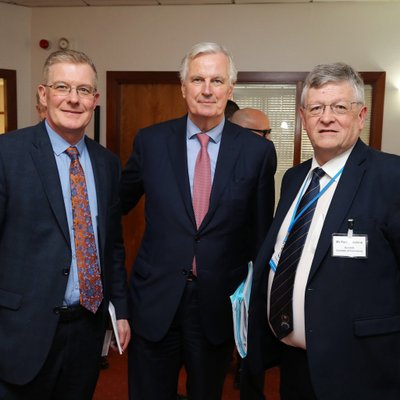
Paddy Malone FCA AITI
Paddy is the principal of Malone & Co. Chartered Accountants in Dundalk. A Fellow of Chartered Accountants Ireland and a Chartered Tax Consultant with the Irish Tax Institute, he has been advising businesses across County Louth and the North-East for over 35 years.