

Farming in Ireland sits at the intersection of several different tax regimes - income tax on trading profits, VAT (or the flat rate scheme), stamp duty on land transfers, CGT when land is sold, and CAT when land passes between generations. Each of these has specific rules and reliefs that apply to farming families, many of which are more generous than the equivalent provisions for other businesses.
Understanding the full picture matters because the decisions made about farm structure, land ownership, and succession can have tax consequences that run into hundreds of thousands of euro. Getting them right requires knowing what reliefs exist and how to qualify for them.
This article covers the main tax obligations and reliefs for Irish farming businesses in 2026.
Income Tax on Farm Profits
Farm trading income - the profit from crop sales, livestock sales, milk receipts, and other farming activity - is taxable as self-employment income under Case I of Schedule D. The tax rates are the same as for any other self-employed business: income tax at 20% up to the standard rate band and 40% above it, plus PRSI at 4% and USC at applicable rates.
The taxable profit is the gross farm receipts minus allowable expenses. Allowable expenses for a farming business include:
Seeds, fertilisers, sprays, and other crop inputs. Feed, veterinary costs, and medicines for livestock. Fuel, oil, and running costs for farm machinery. Hired labour costs. Rent paid on let-in land. Machinery and vehicle repairs. Insurance premiums. Accountancy and professional fees. Interest on farm borrowings.
Capital expenditure - machinery purchases, farm building construction - is not deducted as an expense in the year of purchase. Instead, capital allowances are claimed at 12.5% per year over eight years (15% per year over seven years for certain farm buildings qualifying under the farm buildings allowance).
Stock Relief
Stock relief is a relief specific to farming businesses that reduces the tax on income effectively reinvested in the farm’s trading stock. It works as follows: if the value of your farm trading stock increases during the year - more cattle, more grain in storage, more fodder - you can claim a deduction equal to 25% of that increase.
For example, if your farm stock value increases from 80,000 euro to 120,000 euro during the year, the increase is 40,000 euro. Stock relief of 25% means a deduction of 10,000 euro from your taxable income.
Young trained farmers (defined below) can claim enhanced stock relief of 100% in the first four years of farming, meaning the full increase in stock value is deductible.
The stock relief must be clawed back in future years if stock values fall - but the tax is effectively deferred rather than permanently avoided, and the deferral is valuable given that farm profits can be cyclical.
The Agricultural Flat Rate VAT Scheme
Most Irish farmers use the Agricultural Flat Rate (AFR) scheme rather than standard VAT registration. Under this scheme:
Farmers do not register for VAT in the standard way. They add a flat rate addition of 4.8% to invoices for supplies made to VAT-registered customers (such as meat processors, co-ops, and agricultural merchants). The farmer retains this flat rate addition and does not remit it to Revenue. It is treated as compensation for the VAT on inputs that the farmer cannot reclaim because they are not VAT-registered.
The flat rate scheme is administratively simpler than standard VAT registration. For many farmers whose customers are VAT-registered businesses, the scheme works well.
However, standard VAT registration may be more advantageous in some circumstances - for example, if a farmer has significant capital expenditure (building a new shed, buying expensive equipment) where the VAT on the purchase would generate a large repayment. A one-off comparison before major investment is worthwhile.
Farmers who sell directly to the public - at farmers’ markets, through farm shops, online direct sales - may need to register for VAT in the standard way if their turnover exceeds the registration threshold.
Capital Allowances on Farm Equipment and Buildings
Farm machinery, tractors, and implements qualify for capital allowances at 12.5% per year over eight years. A tractor costing 80,000 euro generates a capital allowance of 10,000 euro per year for eight years.
Farm buildings qualify for allowances under the farm buildings allowance at 15% per year over seven years (some categories at different rates). A new cattle shed costing 140,000 euro generates a capital allowance of 21,000 euro per year for seven years.
TAMS grants and other capital grants must generally be deducted from the cost of the asset before calculating capital allowances - so if a shed costs 140,000 euro and received a TAMS grant of 50,000 euro, the allowances are calculated on the net cost of 90,000 euro.
Leasing Agricultural Land
If you lease out part of your farm, the rental income is taxable under Case V (rental income) rather than Case I (trading income). This has implications for available reliefs - in particular, some farm-specific reliefs (like stock relief) only apply to trading income, not rental income.
Leasing income from agricultural land does benefit from specific income tax exemptions in some circumstances. Long-term leasing of farmland - leases of five years or more to a qualifying lessee - can qualify for an income tax exemption on the leasing income, subject to caps based on the length of the lease.
The leasing exemption is a valuable planning tool for older farmers who are winding down their active farming but want to keep the land in agricultural use before passing it to the next generation.
CGT on the Sale of Agricultural Land
When agricultural land is sold, the seller is potentially liable for CGT at 33% on the gain. Agricultural land that has been owned and farmed for many years will almost certainly have a substantial unrealised gain - land values in County Louth have increased significantly over the past 30 years.
The main CGT reliefs available to farming businesses are:
Retirement Relief. A farmer aged 55 or over who has owned and farmed the land for at least ten years can claim Retirement Relief on the disposal. For a sale to a child, the full gain may be exempt with no upper limit on the value transferred. For a sale to an unconnected buyer, full exemption applies on gains up to 750,000 euro (for those aged 55 to 65) with reduced relief above that.
Revised Entrepreneur Relief. For farmers who do not yet meet the Retirement Relief age or ownership conditions, Revised Entrepreneur Relief provides a reduced CGT rate of 10% (rather than 33%) on qualifying gains up to a lifetime limit of 10 million euro, subject to specific conditions.
CAT on Inherited or Gifted Agricultural Land
Capital Acquisitions Tax applies when agricultural land is gifted or inherited. The standard rate is 33% on the taxable value above the relevant group threshold.
Agricultural Relief reduces the taxable value of qualifying agricultural property by 90%. This relief, combined with the relevant group threshold, means that agricultural land of significant value can often be transferred between generations with a very low or nil CAT liability.
The conditions for Agricultural Relief are covered in detail in the dedicated article on this topic.
Practical Planning for County Louth Farming Families
The farming families I work with across County Louth and the surrounding counties face a consistent set of challenges: keeping the farm profitable in a cost-intensive sector, managing the tax on successful years while deferring where possible in difficult years, and planning the eventual transfer of the farm to the next generation without fracturing the family’s financial position.
The tax system, properly navigated, supports all three of these objectives. The reliefs are genuine and the savings are material. What is required is planning ahead - most of the significant reliefs have qualifying periods, age conditions, or structural requirements that cannot be satisfied at the last minute.
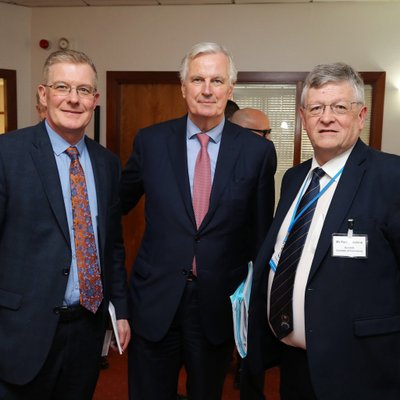
Paddy Malone FCA AITI
Paddy is the principal of Malone & Co. Chartered Accountants in Dundalk. A Fellow of Chartered Accountants Ireland and a Chartered Tax Consultant with the Irish Tax Institute, he has been advising businesses across County Louth and the North-East for over 35 years.